
- 31 October 2026
- Important days
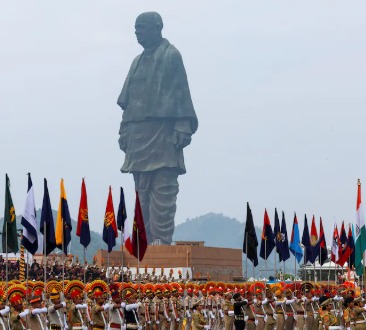
National Unity Day 2026: National Unity Day to be celebrated on October 31, marking the 151st birth anniversary of Sardar Vallabhbhai Patel
In India, National Unity Day (Rashtriya Ekta Diwas) is observed every year on October 31. This day commemorates the birth anniversary of Sardar Vallabhbhai Patel, India’s first Deputy Prime Minister and first Home Minister. The year 2026 marks his 151st birth anniversary. The Government of India established this observance in 2014 with the objective of strengthening the spirit of national unity, integrity, security, and social harmony. Contribution of Sardar Vallabhbhai Patel: Sardar Vallabhbhai...
In India, National Unity Day (Rashtriya Ekta Diwas) is observed every year on October 31. This day commemorates the birth anniversary of Sardar Vallabhbhai Patel, India’s first Deputy Prime Minister and first Home Minister. The year 2026 marks his 151st birth anniversary. The Government of India established this observance in 2014 with the objective of strengthening the spirit of national unity, integrity, security, and social harmony. Contribution of Sardar Vallabhbhai Patel: Sardar Vallabhbhai Patel was born on October 31, 1875, in Nadiad, Gujarat. He is famously known as the 'Iron Man of India.' Following India's independence, he played a pivotal role—with the assistance of V.P. Menon—in the integration of the princely states into the Indian Union. He provided the necessary leadership for the unification process involving more than 560 princely states. His efforts contributed significantly to strengthening the foundations of the political unity and national integrity of independent India. National Unity Day 2026: Event Details and Key Highlights: In 2026, the main event for National Unity Day will be held at the Statue of Unity complex in Ekta Nagar, Gujarat. The Prime Minister will pay tribute to Sardar Patel and participate in the 'Unity Parade'. The central theme for this year’s cultural programs is 'Vande Mataram', as 2026 marks the 150th anniversary of this national song. The event will feature the participation of police forces, Central Armed Police Forces (CAPFs), and police contingents from various states. Key Activities Associated with National Unity Day: On this occasion, events such as the 'Run for Unity', the 'National Unity Pledge', cultural programs, parades, and awareness campaigns are organized across the country. These activities aim to foster a sense of national unity, brotherhood, social harmony, and responsibility toward the nation among the youth and citizens. For the 2026 event, approximately 5,000 individuals from 126 districts affected by Left-Wing Extremism have also been invited to attend. Significance of the Statue of Unity: Located in Ekta Nagar (formerly known as Kevadia) in the Narmada district of Gujarat, the Statue of Unity is dedicated to Sardar Vallabhbhai Patel. It was inaugurated by Prime Minister Narendra Modi on October 31, 2018. Standing at a height of 182 meters, it is the tallest statue in the world. It is constructed near the Sardar Sarovar Dam on the Narmada River. The statue serves as a symbol of national unity, the integration of princely states, and Sardar Patel’s contribution to nation-building. Constitutional Significance of National Unity and Integrity: Maintaining unity amidst India’s diverse languages, religions, cultures, and regional identities is essential for democratic governance and national development. The Preamble to the Indian Constitution expresses a resolve to ensure the unity and integrity of the nation. Article 51A(e) of the Constitution establishes a fundamental duty for citizens to transcend religious, linguistic, and regional diversities, and to foster a spirit of harmony and common brotherhood. National Unity Day serves as an occasion to strengthen this constitutional ethos and promote the ideal of unity in diversity.
Read More
- 31 October 2026
- International
WMO Greenhouse Gas Bulletin 2026: Concentrations of CO₂, Methane, and Nitrous Oxide Reach Record Levels in 2025
The World Meteorological Organization (WMO) released its Greenhouse Gas Bulletin on October 27, 2026. It reports that in 2025, the global average atmospheric concentrations of carbon dioxide (CO₂), methane (CH₄), and nitrous oxide (N₂O) reached record levels. The bulletin is based on observations from the WMO’s Global Atmosphere Watch (GAW) programme. It assesses the atmospheric concentrations of greenhouse gases, rather than focusing solely on emissions occurring within a single year. Concentra...
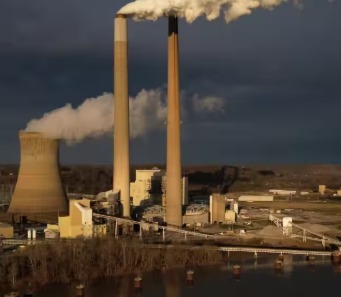
The World Meteorological Organization (WMO) released its Greenhouse Gas Bulletin on October 27, 2026. It reports that in 2025, the global average atmospheric concentrations of carbon dioxide (CO₂), methane (CH₄), and nitrous oxide (N₂O) reached record levels. The bulletin is based on observations from the WMO’s Global Atmosphere Watch (GAW) programme. It assesses the atmospheric concentrations of greenhouse gases, rather than focusing solely on emissions occurring within a single year.
Concentrations of Major Greenhouse Gases: In 2025, the global average concentration of CO₂ was recorded at 426.8 ppm (parts per million), methane at 1,948 ppb (parts per billion), and nitrous oxide at 339.1 ppb. These levels are approximately 53%, 167%, and 26% higher, respectively, than those of the pre-industrial era. The increasing concentration of these gases enhances the absorption of long-wave infrared radiation emitted from the Earth into the atmosphere, thereby strengthening the greenhouse effect and leading to a rise in global temperatures. The Role of Carbon Dioxide (CO₂) and Methane (CH₄): Carbon Dioxide (CO₂) is the primary long-lived greenhouse gas contributing to anthropogenic global warming. Between 2024 and 2025, its concentration increased by 2.8 ppm. Methane (CH₄), on the other hand, is a potent greenhouse gas; its primary sources include the production and use of fossil fuels, livestock farming, rice cultivation, and waste management. While methane has a shorter atmospheric lifetime compared to CO₂, it possesses a higher global warming potential per unit of mass. Nitrous Oxide (N₂O) and Its Major Sources: In 2025, nitrous oxide reached a record global average concentration of 339.1 ppb—approximately 26% above pre-industrial levels. Its natural sources include microbial processes occurring in soils and oceans, while major anthropogenic sources include the excessive use of nitrogen-based fertilizers, agricultural activities, biomass burning, and industrial processes. This gas also affects the ozone layer and serves as a potent, long-lived greenhouse gas.
Radiative Forcing and the Role of Natural Carbon Sinks: Radiative forcing refers to a change in the balance between incoming solar energy and outgoing energy within the Earth's climate system. Positive radiative forcing warms the Earth, while negative radiative forcing leads to cooling. Oceans, forests, and soils act as natural carbon sinks, absorbing atmospheric CO₂. However, the drought and vegetation damage caused by the 2023–24 El Niño event have impacted the carbon-absorption capacity of terrestrial ecosystems, increasing the likelihood of higher CO₂ levels in the atmosphere. Concerns Regarding the Clean Energy Transition, SF₆, and Hydrogen Leakage: The WMO has also emphasized the need to monitor certain industrial gases during the energy transition. Sulfur hexafluoride (SF₆) is used in electrical equipment as an insulating medium to prevent electrical arcing. It has an atmospheric lifetime of over 1,000 years, and its 100-year global warming potential (GWP) is approximately 24,300 times that of CO₂. Meanwhile, although hydrogen (H₂) is not a direct greenhouse gas, it can contribute indirectly to global warming by influencing the atmospheric lifetime of methane and the concentration of ozone through atmospheric chemical processes. Between 2010 and 2024, atmospheric hydrogen concentrations increased by approximately 5.3%. Therefore, alongside the development of clean energy technologies, it is essential to monitor potential leaks of hydrogen and SF₆.
Read More
Concentrations of Major Greenhouse Gases: In 2025, the global average concentration of CO₂ was recorded at 426.8 ppm (parts per million), methane at 1,948 ppb (parts per billion), and nitrous oxide at 339.1 ppb. These levels are approximately 53%, 167%, and 26% higher, respectively, than those of the pre-industrial era. The increasing concentration of these gases enhances the absorption of long-wave infrared radiation emitted from the Earth into the atmosphere, thereby strengthening the greenhouse effect and leading to a rise in global temperatures. The Role of Carbon Dioxide (CO₂) and Methane (CH₄): Carbon Dioxide (CO₂) is the primary long-lived greenhouse gas contributing to anthropogenic global warming. Between 2024 and 2025, its concentration increased by 2.8 ppm. Methane (CH₄), on the other hand, is a potent greenhouse gas; its primary sources include the production and use of fossil fuels, livestock farming, rice cultivation, and waste management. While methane has a shorter atmospheric lifetime compared to CO₂, it possesses a higher global warming potential per unit of mass. Nitrous Oxide (N₂O) and Its Major Sources: In 2025, nitrous oxide reached a record global average concentration of 339.1 ppb—approximately 26% above pre-industrial levels. Its natural sources include microbial processes occurring in soils and oceans, while major anthropogenic sources include the excessive use of nitrogen-based fertilizers, agricultural activities, biomass burning, and industrial processes. This gas also affects the ozone layer and serves as a potent, long-lived greenhouse gas.
Radiative Forcing and the Role of Natural Carbon Sinks: Radiative forcing refers to a change in the balance between incoming solar energy and outgoing energy within the Earth's climate system. Positive radiative forcing warms the Earth, while negative radiative forcing leads to cooling. Oceans, forests, and soils act as natural carbon sinks, absorbing atmospheric CO₂. However, the drought and vegetation damage caused by the 2023–24 El Niño event have impacted the carbon-absorption capacity of terrestrial ecosystems, increasing the likelihood of higher CO₂ levels in the atmosphere. Concerns Regarding the Clean Energy Transition, SF₆, and Hydrogen Leakage: The WMO has also emphasized the need to monitor certain industrial gases during the energy transition. Sulfur hexafluoride (SF₆) is used in electrical equipment as an insulating medium to prevent electrical arcing. It has an atmospheric lifetime of over 1,000 years, and its 100-year global warming potential (GWP) is approximately 24,300 times that of CO₂. Meanwhile, although hydrogen (H₂) is not a direct greenhouse gas, it can contribute indirectly to global warming by influencing the atmospheric lifetime of methane and the concentration of ozone through atmospheric chemical processes. Between 2010 and 2024, atmospheric hydrogen concentrations increased by approximately 5.3%. Therefore, alongside the development of clean energy technologies, it is essential to monitor potential leaks of hydrogen and SF₆.

- 31 October 2026
- National
Bihar Museum Ranks 9th in the List of the World’s 100 Best Museums for 2026; Secures Top Spot in Asia
In the 'World’s 100 Best Museums 2026' list released by the German organization 'Worth a Journey,' the Bihar Museum in Patna has secured the 9th position globally, making it the top-ranked museum in Asia. It is the only museum from India to feature on this list. It has achieved a higher ranking than New York’s Metropolitan Museum of Art (10th place) and the Louvre Museum in Paris (31st place). Top Museums Globally and Their Rankings: In the 2026 list, the Museo Nacional de Antropología in Mexico...
In the 'World’s 100 Best Museums 2026' list released by the German organization 'Worth a Journey,' the Bihar Museum in Patna has secured the 9th position globally, making it the top-ranked museum in Asia. It is the only museum from India to feature on this list. It has achieved a higher ranking than New York’s Metropolitan Museum of Art (10th place) and the Louvre Museum in Paris (31st place). Top Museums Globally and Their Rankings: In the 2026 list, the Museo Nacional de Antropología in Mexico City has secured the first position. It is followed by the Museo del Prado in Madrid, Spain, in second place, and the Louisiana Museum of Modern Art in Humlebæk, Denmark, in third place. Russia’s State Hermitage Museum ranked fourth, and Austria’s Kunsthistorisches Museum ranked fifth. This list includes distinguished museums in the fields of art, history, science, technology, and cultural heritage. Introduction and Architectural Features of the Bihar Museum: The Bihar Museum is a modern museum located on Nehru Path in Patna, established with the objective of preserving and showcasing the historical, archaeological, and cultural heritage of Bihar. Its architectural design was created by Pritzker Prize-winning Japanese architect Fumihiko Maki in collaboration with the Mumbai-based firm Opolis Architects. It was partially opened to the public in August 2015, and the remaining major galleries were opened to visitors in October 2017. Key Collections and Galleries: The Bihar Museum showcases the historical evolution of Bihar from the Stone Age to the modern era. It houses a collection of archaeological artifacts, ancient sculptures, coins, manuscripts, and folk art. Notable highlights include the famous Didarganj Yakshi statue, the gallery of ancient sculptures, a Children’s Gallery, and a 'Diaspora Gallery' dedicated to the Indian diaspora. The Didarganj Yakshi statue was discovered near Patna in 1917 and serves as a significant example of ancient Indian sculpture. Significance of Bihar’s Historical and Cultural Heritage: Bihar has been a vital center for Indian history, religion, philosophy, and culture. In ancient times, Pataliputra—located in this region—served as the capital of the Mauryan Empire. The region is also deeply linked to the development of Buddhism and Jainism. The historical and archaeological materials preserved in the Bihar Museum provide valuable insight into the political, social, and cultural conditions of ancient India. Thus, museums play a significant role in the preservation of cultural heritage, historical education, and the promotion of tourism. Contribution to Cultural Tourism and Heritage Preservation: The global recognition received by the Bihar Museum is likely to boost cultural tourism in Bihar. This museum serves as a complement to the Patna Museum, which was established in 1917. Both museums house distinct historical and archaeological collections. A proposed underground passage between them could allow visitors to explore the heritage of both institutions seamlessly. This initiative is significant from the perspectives of India’s cultural diplomacy, heritage preservation, and tourism-led economic development.
Read More
- 31 October 2026
- National
'Punah Bharan' Mobile App: An Initiative to Identify Sites for Groundwater Recharge Using Scientific and GIS-based Methods
On October 28, 2026, the Ministry of Jal Shakti launched a mobile application called 'Punah Bharan'. Its objective is to scientifically identify suitable sites for artificial groundwater recharge and to enhance the effectiveness of water conservation planning. The app facilitates the development of groundwater recharge strategies through the use of geospatial technology and Geographic Information Systems (GIS). Developing Organizations: This mobile app was jointly developed by the Bhaskaracharya...
On October 28, 2026, the Ministry of Jal Shakti launched a mobile application called 'Punah Bharan'. Its objective is to scientifically identify suitable sites for artificial groundwater recharge and to enhance the effectiveness of water conservation planning. The app facilitates the development of groundwater recharge strategies through the use of geospatial technology and Geographic Information Systems (GIS). Developing Organizations: This mobile app was jointly developed by the Bhaskaracharya National Institute for Space Applications and Geo-informatics (BISAG-N) and the National Water Mission (NWM). The National Water Mission operates under the Department of Water Resources, River Development and Ganga Rejuvenation, within the Ministry of Jal Shakti. BISAG-N is an institution specializing in geospatial technology, satellite-based applications, and GIS.
Key Features and Technical Applications: The 'Recharge' app can identify potential areas suitable for artificial groundwater recharge by analyzing geospatial data within a radius of approximately 3 kilometers. It assesses the geographical and hydrological conditions of a selected location and assists in choosing an appropriate recharge structure. The app’s web portal also provides village-level GIS maps and zoning maps for Artificial Recharge Structures (ARS). Geospatial Data and Analytical Basis: The platform integrates various scientific datasets, including rainfall patterns, groundwater levels, data on groundwater availability and yield, terrain slope, and drainage systems. A combined analysis of this data helps in understanding the hydrological status of an area and determining the most suitable locations and structures for groundwater recharge. Importance of Artificial Groundwater Recharge: Artificial groundwater recharge is a process by which rainwater or surface water is directed underground through various structures to increase the volume of water in aquifers. This involves the use of structures such as recharge pits, percolation tanks, check dams, and recharge wells. Such interventions help improve groundwater levels, increase water availability, mitigate the impact of droughts, and strengthen water security for drinking and irrigation purposes. Significance for Water Conservation and Sustainable Development: The 'Recharge' app facilitates scientific decision-making in water management, supports decentralized planning at the village level, and aids in the selection of recharge structures tailored to local hydrological conditions. This initiative is vital for sustainable groundwater management, ensuring water security, and adapting to climate change. This can also be viewed in the context of broader government efforts related to water conservation and Sustainable Development Goal 6 (SDG-6: Clean Water and Sanitation).
Read More
Key Features and Technical Applications: The 'Recharge' app can identify potential areas suitable for artificial groundwater recharge by analyzing geospatial data within a radius of approximately 3 kilometers. It assesses the geographical and hydrological conditions of a selected location and assists in choosing an appropriate recharge structure. The app’s web portal also provides village-level GIS maps and zoning maps for Artificial Recharge Structures (ARS). Geospatial Data and Analytical Basis: The platform integrates various scientific datasets, including rainfall patterns, groundwater levels, data on groundwater availability and yield, terrain slope, and drainage systems. A combined analysis of this data helps in understanding the hydrological status of an area and determining the most suitable locations and structures for groundwater recharge. Importance of Artificial Groundwater Recharge: Artificial groundwater recharge is a process by which rainwater or surface water is directed underground through various structures to increase the volume of water in aquifers. This involves the use of structures such as recharge pits, percolation tanks, check dams, and recharge wells. Such interventions help improve groundwater levels, increase water availability, mitigate the impact of droughts, and strengthen water security for drinking and irrigation purposes. Significance for Water Conservation and Sustainable Development: The 'Recharge' app facilitates scientific decision-making in water management, supports decentralized planning at the village level, and aids in the selection of recharge structures tailored to local hydrological conditions. This initiative is vital for sustainable groundwater management, ensuring water security, and adapting to climate change. This can also be viewed in the context of broader government efforts related to water conservation and Sustainable Development Goal 6 (SDG-6: Clean Water and Sanitation).

- 31 October 2026
- Appointments
Potential Appointment of Air Marshal Vikram Gaur to the Department of Military Affairs (DMA): A Significant Step Toward the Integration of the Three Armed Services
According to recent media reports, Air Marshal Vikram Gaur is likely to be appointed as an Additional Secretary in the Department of Military Affairs (DMA) under the Ministry of Defence. Should this appointment take place, it would mark the first instance of an Indian Air Force (IAF) officer being appointed to this position. However, there is no official confirmation of this appointment. This development is significant in the context of fostering jointness, coordination, and integration among th...
According to recent media reports, Air Marshal Vikram Gaur is likely to be appointed as an Additional Secretary in the Department of Military Affairs (DMA) under the Ministry of Defence. Should this appointment take place, it would mark the first instance of an Indian Air Force (IAF) officer being appointed to this position. However, there is no official confirmation of this appointment. This development is significant in the context of fostering jointness, coordination, and integration among the three armed services. Military Experience of Air Marshal Vikram Gaur: Air Marshal Vikram Gaur has been serving as the Joint Secretary (Air and Staff Duties) in the Department of Military Affairs since October 2024. He was promoted to the rank of Air Marshal effective July 1, 2026. His experience within the DMA is significant in terms of strengthening operational coordination, policy planning, and military administration across the three services. His potential appointment is expected to further broaden the representation of the three armed services within the defence administration.
Establishment of the Department of Military Affairs (DMA): The Department of Military Affairs (DMA) was established on January 1, 2020, under the Ministry of Defence. The Chief of Defence Staff (CDS) serves as its Secretary. The primary objective behind the creation of this department is to ensure better coordination, joint planning, and the optimal utilization of resources among the Indian Army, the Indian Navy, and the Indian Air Force. Key Functions and Responsibilities of the DMA: The Department of Military Affairs promotes 'jointness' and 'integration' among the three branches of the armed forces. Its core functions include coordinating joint military training, the appointment and staffing of military personnel, joint planning for defence procurement, the restructuring of military commands, and encouraging the use of indigenous defence equipment. It also works towards the establishment of joint theatre commands. Previous Additional Secretaries in the DMA: Before Air Marshal Vikram Gaur, senior military officers such as Lieutenant General Anil Puri and Vice Admiral Atul Anand served as Additional Secretaries in this department. Vice Admiral Atul Anand assumed this position in July 2023. The appointment of Air Marshal Vikram Gaur is significant in terms of representing the Indian Air Force; it enhances the inclusion of the experience and expertise of all three services within the military administration of the Ministry of Defence. Significance of Joint Military Commands and Defence Reforms in India: In modern warfare, coordination across land, sea, air, cyber, and space domains has become essential. In this context, the concept of 'joint theatre commands' enables the integrated use of resources, operational capabilities, and command structures across the three services. The DMA plays a crucial role in establishing institutional coordination in this regard. This contributes to the better utilization of military resources, enhanced operational efficiency, greater defence self-reliance, and the strengthening of national security capabilities.
Read More
Establishment of the Department of Military Affairs (DMA): The Department of Military Affairs (DMA) was established on January 1, 2020, under the Ministry of Defence. The Chief of Defence Staff (CDS) serves as its Secretary. The primary objective behind the creation of this department is to ensure better coordination, joint planning, and the optimal utilization of resources among the Indian Army, the Indian Navy, and the Indian Air Force. Key Functions and Responsibilities of the DMA: The Department of Military Affairs promotes 'jointness' and 'integration' among the three branches of the armed forces. Its core functions include coordinating joint military training, the appointment and staffing of military personnel, joint planning for defence procurement, the restructuring of military commands, and encouraging the use of indigenous defence equipment. It also works towards the establishment of joint theatre commands. Previous Additional Secretaries in the DMA: Before Air Marshal Vikram Gaur, senior military officers such as Lieutenant General Anil Puri and Vice Admiral Atul Anand served as Additional Secretaries in this department. Vice Admiral Atul Anand assumed this position in July 2023. The appointment of Air Marshal Vikram Gaur is significant in terms of representing the Indian Air Force; it enhances the inclusion of the experience and expertise of all three services within the military administration of the Ministry of Defence. Significance of Joint Military Commands and Defence Reforms in India: In modern warfare, coordination across land, sea, air, cyber, and space domains has become essential. In this context, the concept of 'joint theatre commands' enables the integrated use of resources, operational capabilities, and command structures across the three services. The DMA plays a crucial role in establishing institutional coordination in this regard. This contributes to the better utilization of military resources, enhanced operational efficiency, greater defence self-reliance, and the strengthening of national security capabilities.
- 31 October 2026
- Schemes & committees
Khelo India Sports Goods Manufacturing Scheme: ₹1,856.67 Crore Approved to Boost the Domestic Sports Equipment Industry
The Cabinet Committee of the Central Government approved the 'Khelo India Sports Goods Manufacturing Scheme' on October 28, 2026. A total budgetary provision of ₹1,856.67 crore has been made for this scheme, spanning the financial years 2026-27 to 2033-34. The scheme was originally announced in the Union Budget for 2026-27. Its primary objective is to transform India into a global hub for sports equipment manufacturing and to enhance the competitiveness of the domestic industry. Key Objectives o...
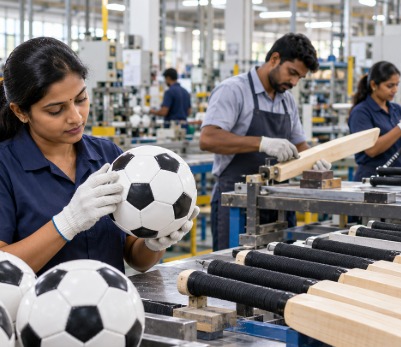
The Cabinet Committee of the Central Government approved the 'Khelo India Sports Goods Manufacturing Scheme' on October 28, 2026. A total budgetary provision of ₹1,856.67 crore has been made for this scheme, spanning the financial years 2026-27 to 2033-34. The scheme was originally announced in the Union Budget for 2026-27. Its primary objective is to transform India into a global hub for sports equipment manufacturing and to enhance the competitiveness of the domestic industry. Key Objectives of the Scheme: The scheme aims to strengthen the entire manufacturing value chain for sports equipment. Its goals include attracting domestic and foreign investment, increasing production capacity, reducing dependence on imports, encouraging domestic value addition, and boosting exports. Additionally, support will be provided for Research and Development (R&D), product design, modern manufacturing technologies, quality certification, and skill development. This initiative aligns with the objectives of 'Make in India' and 'Atmanirbhar Bharat' (Self-Reliant India). Sports Goods Manufacturing Zones (SGMZ): Under the scheme, dedicated Sports Goods Manufacturing Zones will be developed. These industrial clusters will integrate manufacturing units, raw material suppliers, design and prototyping centers, testing laboratories, and ancillary industries. This is expected to facilitate the development of shared infrastructure, reduce production costs, foster technical collaboration, and enhance industrial efficiency. Investment Promotion and Support for the MSME Sector: A total of ₹1,130 crore has been allocated under the scheme for investment- and production-based support. This includes provisions for up to 20% support on eligible investments for 'anchor investors' in designated manufacturing clusters, and financial incentives of up to 15%—based on turnover—for eligible manufacturers who invest a minimum of ₹10 crore. Furthermore, Micro, Small, and Medium Enterprises (MSMEs) will be supported through shared infrastructure and modern production facilities, with the aim of enhancing the productivity, quality, and competitiveness of smaller manufacturers. International Quality Certification, Research, and Skill Development: An allocation of ₹105 crore has been made for obtaining quality certifications and accreditations from international sports federations. Under this, support will be provided for up to 70% of the costs associated with obtaining initial certification and up to 50% of the costs for certification renewal. Additionally, the scheme will promote Research and Development (R&D), material science, product design, and innovation. Coordination will be established with the Ministry of Skill Development and Entrepreneurship to develop a skilled workforce tailored to the specific requirements of the industry.
Export Promotion and Indian Sports Manufacturing Clusters: Under the scheme, emphasis will be placed on international branding, marketing, and gaining access to foreign markets to boost the export of Indian sports equipment. Initiatives such as the 'India Sports Expo' and the 'Brand India' campaign are proposed for this purpose. In India, Jalandhar (Punjab) and Meerut (Uttar Pradesh) are the primary hubs for sports goods manufacturing. Micro and Small Enterprises (MSEs) contribute approximately 90% of the total production in this sector. Products manufactured here include cricket equipment, sports balls, protective gear, gym equipment, and athletic training gear. The scheme is expected to foster job creation, the development of MSMEs, import substitution, and export competitiveness.
Read More
Export Promotion and Indian Sports Manufacturing Clusters: Under the scheme, emphasis will be placed on international branding, marketing, and gaining access to foreign markets to boost the export of Indian sports equipment. Initiatives such as the 'India Sports Expo' and the 'Brand India' campaign are proposed for this purpose. In India, Jalandhar (Punjab) and Meerut (Uttar Pradesh) are the primary hubs for sports goods manufacturing. Micro and Small Enterprises (MSEs) contribute approximately 90% of the total production in this sector. Products manufactured here include cricket equipment, sports balls, protective gear, gym equipment, and athletic training gear. The scheme is expected to foster job creation, the development of MSMEs, import substitution, and export competitiveness.
- 31 October 2026
- Economy
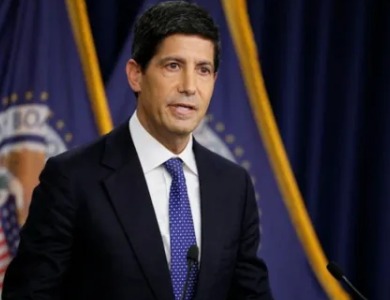
US Federal Reserve Keeps Interest Rates Steady at 3.75%–4% in October 2026; FOMC Vote Stands at 10–2
During the Federal Open Market Committee (FOMC) meeting held on October 27–28, 2026, the US Federal Reserve decided to maintain the target range for the federal funds rate at 3.75%–4%. The proposal received 10 votes in favor and 2 against. This decision was reached in light of high inflation levels, even as the US economy continues to exhibit strong economic activity. Dissent and Voting: Federal Reserve Governor Lisa D. Cook and Cleveland Federal Reserve Bank President Beth M. Hammack opposed th...
During the Federal Open Market Committee (FOMC) meeting held on October 27–28, 2026, the US Federal Reserve decided to maintain the target range for the federal funds rate at 3.75%–4%. The proposal received 10 votes in favor and 2 against. This decision was reached in light of high inflation levels, even as the US economy continues to exhibit strong economic activity. Dissent and Voting: Federal Reserve Governor Lisa D. Cook and Cleveland Federal Reserve Bank President Beth M. Hammack opposed the decision to keep interest rates unchanged. Both members advocated for a 25-basis-point hike, which would have brought the interest rate to a range of 4%–4.25%. This divergence highlights the ongoing challenge within US monetary policy of balancing inflation control with economic growth.
Key reasons for keeping interest rates unchanged: According to the Federal Reserve, economic activity in the United States remains robust, supported by improvements in domestic consumption, investment, and productivity. Despite a slowdown in the pace of job creation within the labor market, the unemployment rate has remained relatively stable. However, inflation persists above the Federal Reserve’s 2% target. Consequently, it was deemed necessary to evaluate additional economic data before determining future monetary policy. Definition and impact of the Federal Funds Rate: The Federal Funds Rate is the interest rate at which U.S. banks and other eligible depository institutions lend their reserve balances to one another on an overnight basis. The Federal Open Market Committee (FOMC) sets the target range for this rate. An increase in the rate generally makes borrowing more expensive, reduces demand for consumption and investment, and helps in controlling inflation. Conversely, a reduction in the rate makes borrowing cheaper and provides a stimulus to economic activity. The Federal Reserve’s Dual Mandate: The U.S. Congress has tasked the Federal Reserve with two primary objectives: achieving maximum employment and maintaining price stability. The Fed’s long-term inflation target is 2%. While raising interest rates helps control inflation, it can also impact the pace of employment and investment. On the other hand, lowering interest rates boosts economic activity, but excessive demand carries the risk of driving up inflation. Thus, maintaining a balance between these two objectives remains the central challenge of monetary policy. Structure of the FOMC and its impact on the global economy: The Federal Open Market Committee (FOMC) is the key committee within the U.S. Federal Reserve responsible for setting monetary policy. It consists of 12 voting members: the 7 members of the Federal Reserve Board of Governors, the President of the Federal Reserve Bank of New York, and 4 presidents from the remaining 11 regional Federal Reserve Banks, who serve on a rotating basis. Changes in the Federal Reserve's interest rates impact global capital flows, the US dollar exchange rate, international investments, and emerging economies. In emerging markets like India, this influence can be observed through Foreign Portfolio Investment (FPI), the rupee exchange rate, foreign exchange reserves, and imported inflation. The next meeting of the FOMC is scheduled for December 8–9, 2026.
Read More
Key reasons for keeping interest rates unchanged: According to the Federal Reserve, economic activity in the United States remains robust, supported by improvements in domestic consumption, investment, and productivity. Despite a slowdown in the pace of job creation within the labor market, the unemployment rate has remained relatively stable. However, inflation persists above the Federal Reserve’s 2% target. Consequently, it was deemed necessary to evaluate additional economic data before determining future monetary policy. Definition and impact of the Federal Funds Rate: The Federal Funds Rate is the interest rate at which U.S. banks and other eligible depository institutions lend their reserve balances to one another on an overnight basis. The Federal Open Market Committee (FOMC) sets the target range for this rate. An increase in the rate generally makes borrowing more expensive, reduces demand for consumption and investment, and helps in controlling inflation. Conversely, a reduction in the rate makes borrowing cheaper and provides a stimulus to economic activity. The Federal Reserve’s Dual Mandate: The U.S. Congress has tasked the Federal Reserve with two primary objectives: achieving maximum employment and maintaining price stability. The Fed’s long-term inflation target is 2%. While raising interest rates helps control inflation, it can also impact the pace of employment and investment. On the other hand, lowering interest rates boosts economic activity, but excessive demand carries the risk of driving up inflation. Thus, maintaining a balance between these two objectives remains the central challenge of monetary policy. Structure of the FOMC and its impact on the global economy: The Federal Open Market Committee (FOMC) is the key committee within the U.S. Federal Reserve responsible for setting monetary policy. It consists of 12 voting members: the 7 members of the Federal Reserve Board of Governors, the President of the Federal Reserve Bank of New York, and 4 presidents from the remaining 11 regional Federal Reserve Banks, who serve on a rotating basis. Changes in the Federal Reserve's interest rates impact global capital flows, the US dollar exchange rate, international investments, and emerging economies. In emerging markets like India, this influence can be observed through Foreign Portfolio Investment (FPI), the rupee exchange rate, foreign exchange reserves, and imported inflation. The next meeting of the FOMC is scheduled for December 8–9, 2026.

- 31 October 2026
- Sports
WPL 2027: Uma Kashvi becomes the youngest cricketer in Women’s Premier League history to secure a contract
Young female cricketer from Karnataka, Uma Kashvi (Kashvi Kandikuppa), has set a record by becoming the youngest player in the history of the Women’s Premier League (WPL) to secure a contract. During the WPL 2027 auction held in Kochi on October 28, 2026, the Delhi Capitals added her to their squad at her base price of ₹10 lakh. Age and Previous Record: Born on April 9, 2011, Kashvi achieved this milestone at the age of approximately 15. She surpassed the previous record held by Haryana crickete...
Young female cricketer from Karnataka, Uma Kashvi (Kashvi Kandikuppa), has set a record by becoming the youngest player in the history of the Women’s Premier League (WPL) to secure a contract. During the WPL 2027 auction held in Kochi on October 28, 2026, the Delhi Capitals added her to their squad at her base price of ₹10 lakh. Age and Previous Record: Born on April 9, 2011, Kashvi achieved this milestone at the age of approximately 15. She surpassed the previous record held by Haryana cricketer Diya Yadav, who had secured a WPL contract at the age of 16. This achievement serves as an example of young talent in women’s cricket gaining access to a professional platform. Playing Style and Expertise: Uma Kashvi is an all-rounder who bats right-handed and bowls right-arm off-spin. Her proficiency in both batting and spin bowling makes her a versatile, multi-dimensional player for her team. She began playing cricket at the age of about seven and a half and received training at the NICE Cricket Academy in Bengaluru. Performance in Domestic Cricket: In the 2025-26 BCCI Women’s Under-15 One-Day Tournament, Kashvi delivered an outstanding performance, scoring 516 runs across 6 innings at an average of 172. During this period, she notched up three centuries and one half-century. Her performance established her as one of the top emerging talents in age-group cricket. Leadership Ability and International Experience: Kashvi has captained the Karnataka Under-15 team and also served as captain for the Bengaluru Blasters in the Maharani Trophy. During the Indian Under-19 team’s tour of Sri Lanka in 2026, she claimed four wickets in three T20 matches and two wickets in two One-Day matches. Significance for Indian Women’s Cricket: The opportunities provided to young players in the WPL reflect the growth of women’s cricket in India, the identification of talent, and the expansion of professional sporting avenues. Through franchise-based competitions, young players get the chance to train and compete alongside experienced international and national-level cricketers, gaining exposure to high-level competition. This is significant for the commercialization of women’s sports and the development of sporting talent in India.
Read More